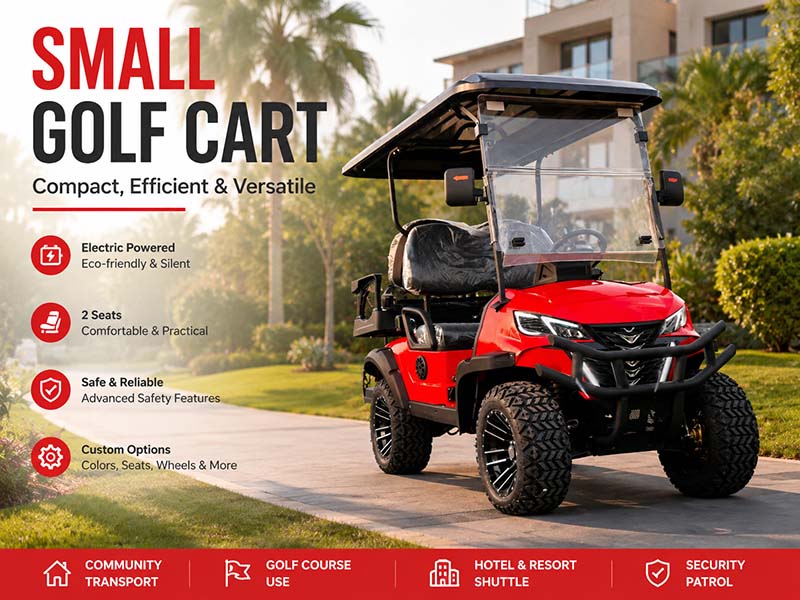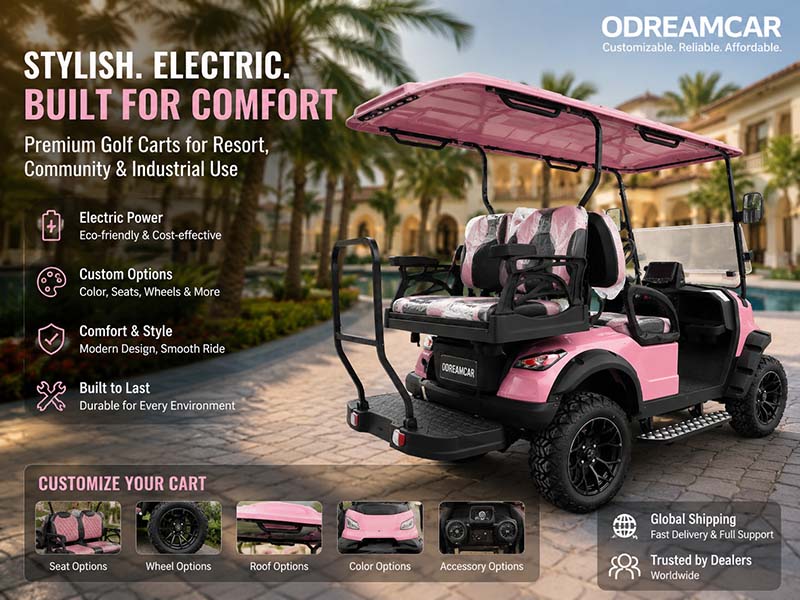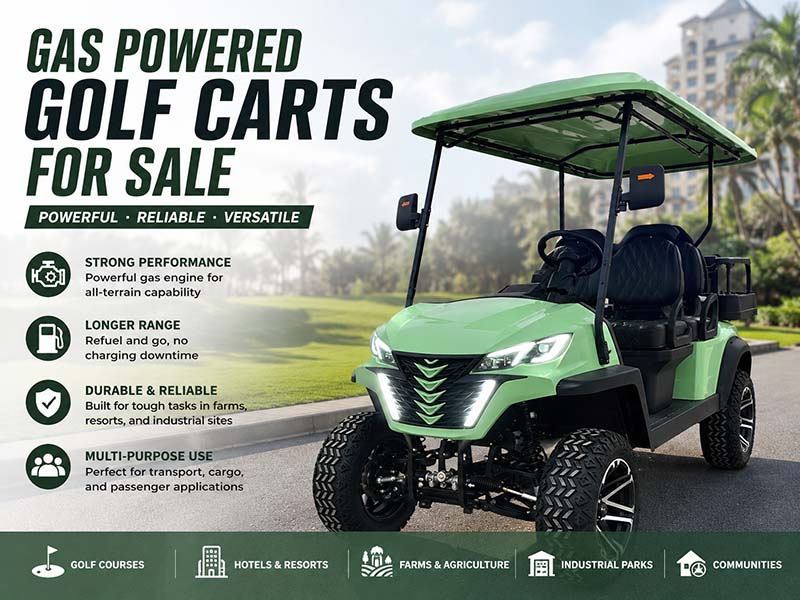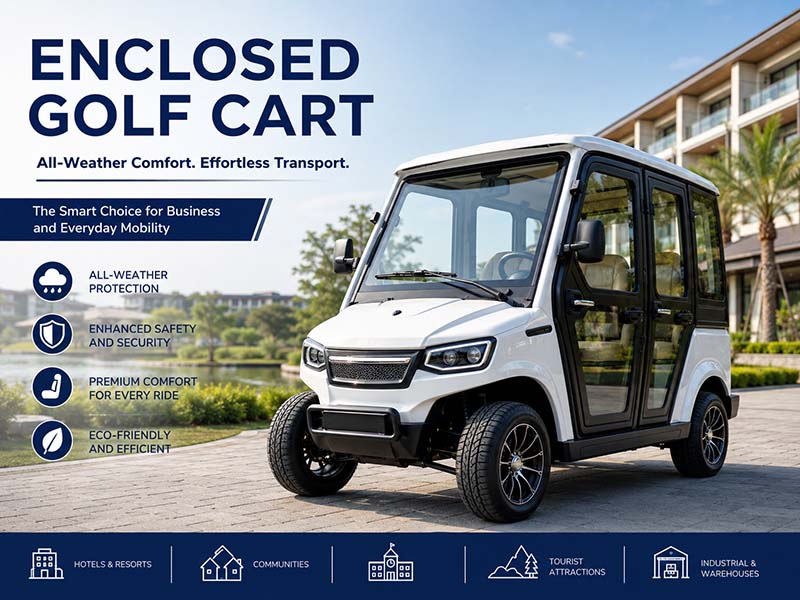

In the context of continuous upgrades in global short-distance transportation, golf carts have gradually evolved from traditional golf course vehicles into widely used solutions for community commuting, resort hotel shuttle services, farm transportation, and campus mobility. As a result, “Affordable Golf Carts” has become an increasingly popular keyword.
For users, the most common questions when purchasing a golf cart are: How much is a golf cart? How long do golf cart batteries last? and Are golf carts street legal? These questions directly determine the cost of use and the scope of applications.
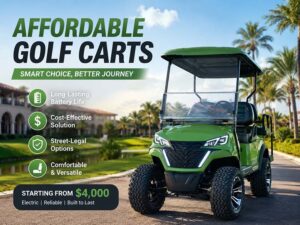
What defines an “Affordable Golf Cart”?
An “Affordable Golf Cart” is not merely a low-priced product; rather, it represents a comprehensive solution characterized by low long-term operating costs, excellent value for money, and ease of maintenance.
Such vehicles typically feature:
Reasonable pricing combined with reliable specifications
High-efficiency, long-lasting battery systems
Readily available maintenance services and spare parts
Adaptability to diverse usage scenarios
Compared to traditional high-end brands, ODREAMCAR places greater emphasis on practicality and the management of overall costs.
Golf Cart Price Range
During the purchasing process, the most frequently asked question is: “How much is a golf cart?”
In reality, golf cart prices vary significantly, depending primarily on specifications and intended use:
New Cart Price Ranges:
Entry-level models: $4,000 – $7,000
Mid-range models: $7,000 – $12,000
High-end custom models: Over $12,000
Used Market:
Standard used carts: $2,000 – $6,000
Factors Affecting Price:
Battery type (lead-acid vs. lithium-ion)
Seating capacity (2-seater / 4-seater / 6-seater)
Street-legal capability (LSV)
Brand and manufacturing quality
Customization level
Within the Chinese manufacturing landscape, brands like ODREAMCAR are bringing “affordable golf carts” to a broader market by combining high-end specifications with cost-effective production.

Battery Lifespan and Operating Costs
Another crucial question is: How long do golf cart batteries last?
Battery lifespan directly impacts the overall cost of ownership and the frequency of maintenance.
Typical battery lifespans:
Lead-acid batteries: 2–4 years
Lithium batteries: 5–10 years
Factors affecting lifespan:
Charging frequency and method
Operating environment (high or low temperatures)
Depth of discharge
Battery brand and quality
In terms of long-term costs, although lithium systems have a higher initial price, they entail lower maintenance expenses, making them a better fit for the true definition of “affordable golf carts.”
Electric vs. Gas: Which is More Cost-Effective?
Electric Golf Carts
Pros:
Low operating costs
Quiet operation
Simple maintenance
Better suited for residential communities and hotels
Gas Golf Carts
Pros:
Longer range
Suitable for heavy loads or challenging terrain
However, in terms of overall cost-effectiveness, electric models align better with modern trends toward affordability.
Are Golf Carts Street-Legal?
Many buyers ask: “Are golf carts street-legal?”
The answer: It depends on the vehicle’s configuration and local regulations.
General Requirements (LSV Standards):
To be street-legal, they typically require:
Speed limits (usually capped at around 25 mph / 40 km/h)
Headlights, turn signals, and brake lights
Seatbelts
Rearview mirrors
A VIN or compliance certification
Usage Scenarios:
Residential community roads
Resort grounds
Campuses and industrial parks
In some states, golf carts can be driven on public roads if registered as Low-Speed Vehicles (LSVs), provided they meet specific safety standards.
Key Use Cases for Affordable Golf Carts
The strength of these affordable golf carts lies in their versatility across various settings:
Community commuting (Low-Speed Vehicles for Community Use)
Hotel and resort shuttle services
Golf courses
Farm and ranch transport
Campus and tourist attraction operations
How to Choose a Truly “Affordable” Golf Cart?
Look beyond the price tag and consider the overall value:
1. Total Cost of Ownership (TCO)
Includes electricity, maintenance, and battery replacement costs
2. Battery System
Prioritize lithium-ion systems
3. Suitability for Use Case
Residential: 4-seater
Commercial operations: 6-seater
Industrial use: Cargo/utility models
4. Upgradeability
Examples include:
Lift kits
Off-road tires
Street-legal kits
“Made in China” Drives the Growth of Affordable Golf Carts
In recent years, Chinese manufacturing has risen rapidly in the global market, offering key advantages such as:
Higher specifications at lower prices
Support for OEM/ODM customization
Strong mass production capabilities
Short lead times
Suitability for dealerships and B2B procurement
Manufacturers like ODREAMCAR are reshaping the global pricing structure for affordable golf carts, enabling more users to access high-spec models at a lower cost.
The essence of affordable golf carts goes beyond mere low cost; it encompasses:
Lower long-term operating costs
A balance of features and performance
Suitability for diverse use cases
Sustainable maintenance
Driven by electrification and the optimization of global supply chains, this market is expanding rapidly, becoming a vital solution for community transport and short-distance travel.
FAQ
Q1: How much is a golf cart?
A: Most new golf carts cost between $4,000 and $12,000 depending on features, while used ones can start around $2,000.
Q2: How long do golf cart batteries last?
A: Lead-acid batteries last 2–4 years, while lithium batteries can last 5–10 years depending on usage.
Q3: Are golf carts street legal?
A: Yes, but only if they meet LSV requirements such as lights, seat belts, mirrors, and speed limits. Rules vary by state.
Q4: What is the best affordable golf cart type?
A: Electric lithium models are usually the most cost-effective for long-term use.