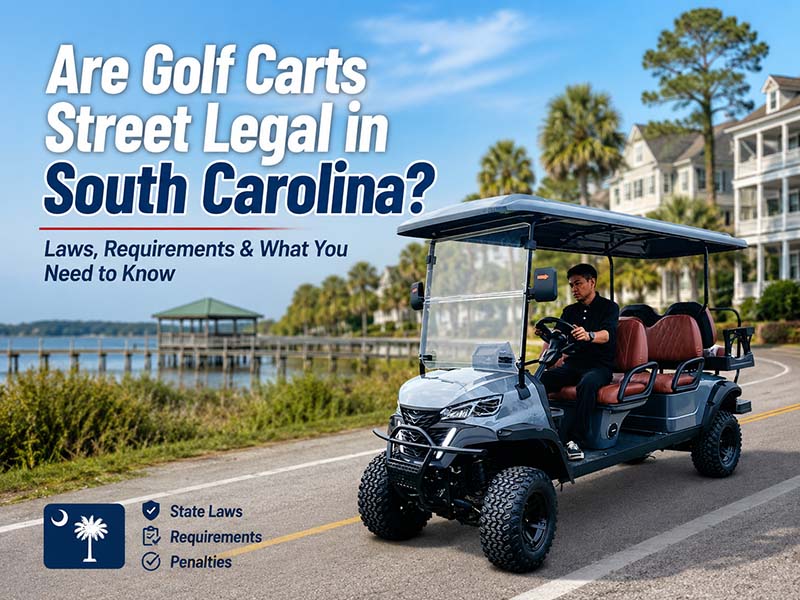

As golf carts globally transform from “course tools” to “short-distance transportation,” a growing number of users are focusing on a core question: Are golf carts street legal?
As a professional golf cart manufacturer, Odreamcar must clearly state:
Whether golf carts can be used on public roads is never a globally unified answer, but rather a complex issue highly dependent on national, regional, and regulatory systems.
This article will systematically analyze the definition and underlying logic of “street legality” from a manufacturer’s perspective, as well as the policy differences across different countries.

What is "Street Legal"?
Globally, “Street Legal” generally means that a vehicle can legally drive on public roads, but only if it meets three core conditions:
1. Vehicle Classification Compliance (Most Crucial)
Most countries do not directly allow “traditional golf carts” on the road, but require them to be converted into:
Low-Speed Vehicles (LSVs)
Or Neighborhood Electric Vehicles (NEVs)
According to regulations, these vehicles typically need to have:
Maximum speed: 20–25 mph (approximately 32–40 km/h)
Complete Vehicle Identification Number (VIN)
Safety certification
Conclusion: Ordinary golf carts ≠ Road-legal vehicles
2. Safety Configuration Compliance
Major global regulations (such as the US FMVSS 500) require vehicles to have:
Headlights, taillights, turn signals
Rearview mirrors
Seat belts
Horn
Windshield
Otherwise, even if it can run, it is illegal to drive on the road. 3. Administrative and Driving Requirements
In most countries, legally driving on public roads also requires:
Vehicle registration and license
Insurance
Driver’s license
In other words: Once on public roads, golf carts are managed as “motor vehicles”.

Global Policy Differences: Roadworthiness in Different Countries?
Based on Odreamcar’s export experience, policy differences between countries are significant.
1. USA: Most Open, But Most Complex Rules
The US is one of the most prevalent markets for road use of golf carts globally.
Over 42 states allow some form of road use.
However, they must meet LSV standards.
Typical Rules:
Only allowed on roads with speed limits ≤35 mph.
Requires registration, license plates, and insurance.
Some areas have time restrictions (e.g., daytime driving).
Summary: Permitted, but highly dependent on state and city policies.
2. Europe (EU): Permitted, but with higher requirements
In the EU, golf carts are generally classified as:
Light Four-Wheeled Vehicles (L6e/L7e).
Some models require EEC certification for road use.
Typical Situations:
Germany, France: Permitted, but requires strict certification
Italy, Spain: Primarily used in tourist areas
Summary of Characteristics:
Strict regulations, high certification costs, but legal road use is possible.
3. China: Generally not allowed on public roads
In China:
Golf carts are usually defined as course-specific vehicles
Cannot be registered
Prohibited from entering city roads
Only permitted in the following scenarios:
Scenic spots
Golf courses
Industrial parks
Summary of Characteristics: Almost no “street legality” space
4. Japan: Extremely strict
In Japan (e.g., Tokyo area):
Golf carts cannot be registered as ordinary motor vehicles
Limited to private grounds or enclosed areas
Summary of Characteristics:
Strict regulations, basically not allowed on public roads
5. Southeast Asia and the Middle East: Flexible but not standardized
For example:
Thailand, Vietnam: Permitted in some tourist areas
UAE: Permitted in high-end communities
Summary of Characteristics: Relies on regional management, not nationally unified regulations
Why does the same car have different fates in different countries?
From a manufacturer’s perspective, the fundamental reason lies in a three-tiered regulatory structure:
1. National regulations (defining vehicle type)
For example: LSV, NEV standards
2. Local governments (deciding whether to allow on the road)
Even if the national government allows it, the city may prohibit it.
3. Road-level restrictions (the finest granularity)
Different road rules exist within the same city.
This is why: A car is legal in city A but illegal in city B.
Odreamcar Manufacturer's Advice: How to Achieve "Road Legality"?
If your goal is “street legality,” we recommend planning from the outset:
✔ Choose the LSV standard model
Speed ≥ 25 km/h
With VIN
✔ Standard safety systems
Lights, steering, and braking systems
Seat belts and side mirrors
✔ Confirm local regulations in advance
National + City double confirmation
Odreamcar's Recommendations for Street-Leading Vehicles
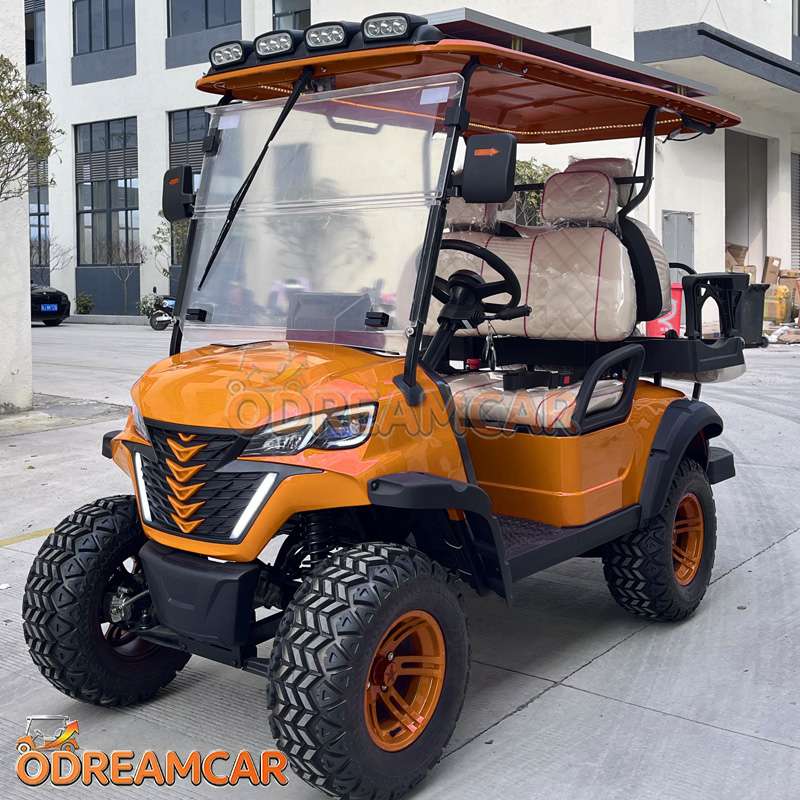
Based on global market demand, we primarily recommend the following types:

✔ Passenger Capacity : 4 Seats
✔ Max.Speed : 25-30km/h(adjustable)
✔ Driving Range : 80km
✔ Battery : lead-acid battery
✔ Passenger Capacity : 2+2 Seats
✔ Max.Speed : 25-30km/h(adjustable)
✔ Driving Range : 80km
✔ Battery : lead-acid battery 8V/piece 6 pieces
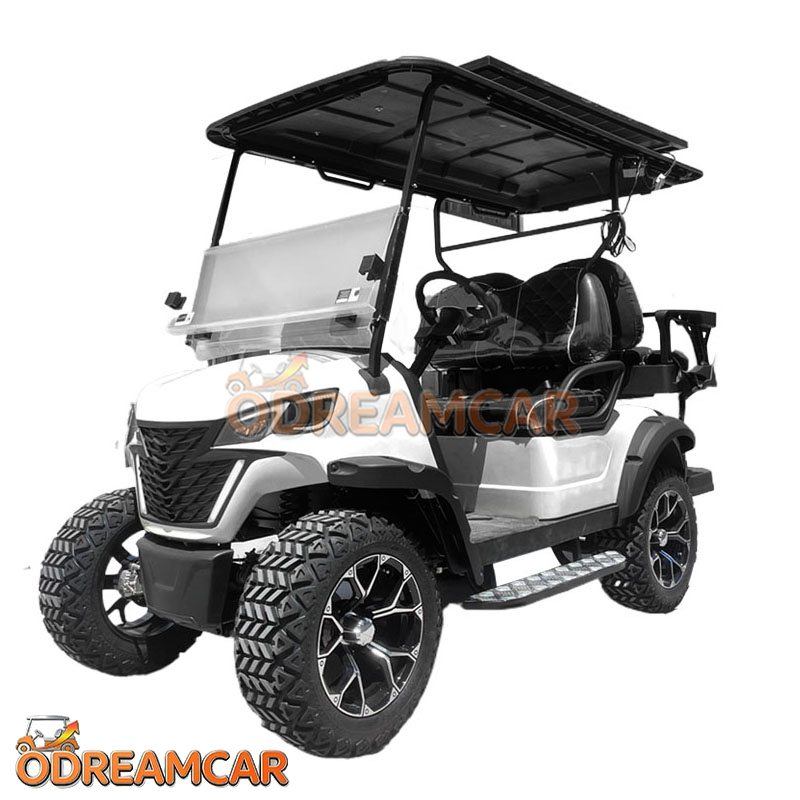
✔ Passenger Capacity : 2+2 Seats
✔ Max.Speed : 25-30km/h(adjustable)
✔ Driving Range : 80km
✔ Battery : lead-acid battery 8V/piece 6 pieces

✔ Passenger Capacity : 2+2 Seats
✔ Max.Speed : 25-30km/h(adjustable)
✔ Driving Range : 80km
✔ Battery : lead-acid battery 8V/piece 6 pieces

✔ Passenger Capacity : 2+2 Seats
✔ Max.Speed : 25-30km/h(adjustable)
✔ Driving Range : 80km
✔ Battery : lead-acid battery 8V/piece 6 pieces
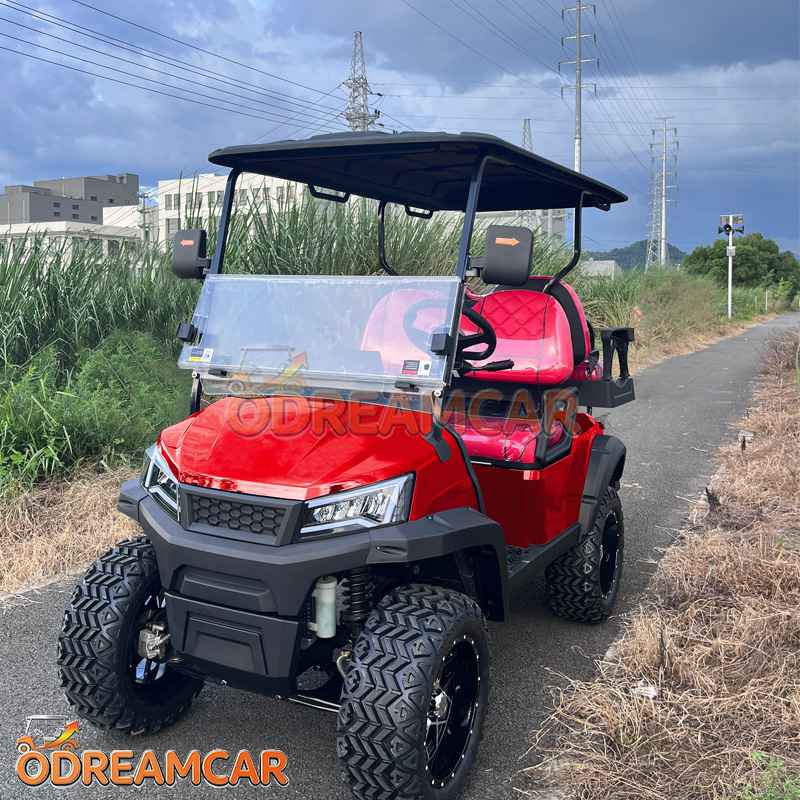
✔ Passenger Capacity : 2+2 Seats
✔ Max.Speed : 25-30km/h(adjustable)
✔ Driving Range : 80km
✔ Battery : lead-acid battery 8V/piece 6 pieces
Street legality isn't a product attribute, but rather a result of "regulations + configuration."
From the perspective of Odreamcar manufacturers, we summarize the most crucial point:
Golf carts themselves don’t have the attribute of “whether they can be driven on the road,” only the result of “whether they comply with local regulations.”
In the US: Widespread legal use
In Europe: Feasible but with high barriers to entry
In China/Japan: Basically not feasible
Final advice:
If your goal is to drive on the road:
Check the regulations first, then choose a model, rather than buying a car first and then asking if it’s roadworthy.