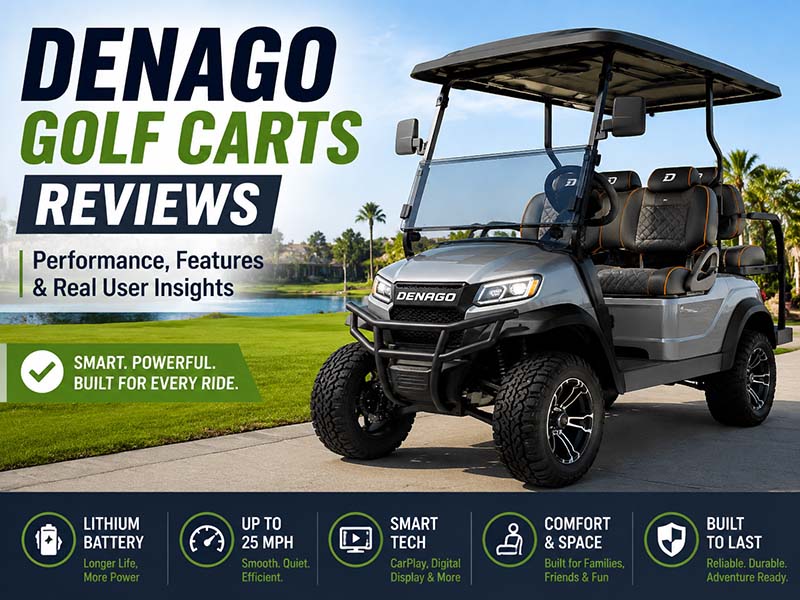

As an emerging electric golf cart brand that has rapidly entered the U.S. market in recent years, Denago is attracting the attention of residential community users, resort operators, and consumers interested in light off-roading, thanks to its modern design, extensive features, and strong value proposition. Compared to traditional brands like Club Car, EZGO, and Yamaha, Denago emphasizes a combination of smart technology, comfort, and high-end standard specifications, driving significant growth among younger users and families.
This raises the question: Are Denago golf carts actually worth buying? This review provides a comprehensive analysis covering the brand, performance, models, user feedback, and comparative insights.

Denago Brand Background
Denago EV is an emerging brand in the electric low-speed vehicle (LSV) sector, positioning itself as a provider of “high-spec electric mobility solutions” rather than merely a traditional golf cart manufacturer.
Key characteristics include:
Standard lithium-ion batteries instead of traditional lead-acid batteries
A strategic focus on the North American market for community commuting and resort transportation
An emphasis on smart technology experiences, such as digital dashboards and integrated infotainment systems
An “automotive-style” design aesthetic that moves away from the traditional golf cart look
While this strategy has enabled Denago to make rapid market inroads, it has also resulted in an after-sales service network that is not yet fully mature.
Denago Main Model Overview
1. Denago Rover XL
This is the most popular 4-seater version, mainly designed for family users and community transportation.
4-seat layout
Strong comfort performance
Suitable for daily commuting and neighborhood travel
Some users prefer configurations similar to a 4 seat forward facing golf cart layout to improve rear passenger comfort and maximize space utilization.
2. Denago Nomad XL
A model with a more off-road-oriented design:
Elevated chassis for better ground clearance
Stronger terrain capability
More sporty exterior styling
It is ideal for users who prefer a more personalized and adventure-style golf cart.
3. Denago Rover XL6 / XXL
The 6-seater lineup is an important product series for Denago:
Designed for family use or passenger transport applications
More spacious rear seating layout
Suitable for community shuttle services and hotel operations
In many commercial scenarios, demand for models similar to 6 seater golf cart for sale has been growing rapidly, especially in resorts and high-end residential communities.
4. Other Models (CITY / Scout 2 / OXEN)
CITY: Designed for short-distance urban commuting
Scout 2: Entry-level economical model
OXEN: More utility-focused / commercial-use model

Core Performance Review
1. Powertrain Performance
Denago generally uses a 5kW–6.3kW AC motor system, providing stable output and making it suitable for low-speed road use.
Top speed: approximately 20–25 mph
Smooth acceleration at startup
Excellent performance on urban roads2
2. Battery & Range
Standard 51.2V lithium battery system
Range: approximately 30–45 miles (varies depending on load and terrain)
Supports fast charging
Overall, the lithium battery system is one of its biggest selling points.
3. Driving Experience & Comfort
Comfortable suspension system
Light and easy steering
Well-suited for community roads and flat surfaces
In practical use scenarios, such as carrying items like a Golf cart with bag (golf bags or luggage), the rear storage space still provides reasonable practicality.
4. Smart Features
Denago stands out in its class with relatively advanced configurations:
Digital instrument cluster
Apple CarPlay / Android Auto support
LED lighting system
Reverse camera system
Denago Golf Carts: Pros
1. Extensive standard features
Standard specifications rival the high-end trims of traditional brands.
2. Modern aesthetics
The design resembles a “mini electric vehicle,” offering a more high-tech look.
3. Standardized lithium battery
No need for additional battery system upgrades.
4. Excellent value for money
Highly competitive pricing compared to brands in the same class.
Denago Golf Carts: Cons
1. Limited after-sales network
Service coverage is less extensive than that of established brands like Club Car.
2. Limited long-term reliability data
As a new brand, it lacks a long track record of market validation.
3. High reliance on specific parts channels
Some parts must be sourced through dealer networks.
4. Lower resale value
Market recognition in the used vehicle sector is still developing.
Summary of Real User Reviews
Positive Feedback:
Comfortable driving experience
Extensive feature set
Easy to operate
Low noise levels
Negative Feedback:
Occasional minor electronic system glitches
Long wait times for repairs in some regions
Inconsistent dealership experiences
Overall, the user experience depends heavily on the quality of service provided by the local dealer.
Denago vs. Traditional Brands
Denago vs. Club Car
Denago: Higher specifications, lower price
Club Car: Superior stability and brand strength
Denago vs. EZGO
Denago: More advanced tech features
EZGO: More established after-sales network
Denago vs. Yamaha
Denago: More modern design
Yamaha: Greater reliability and durability
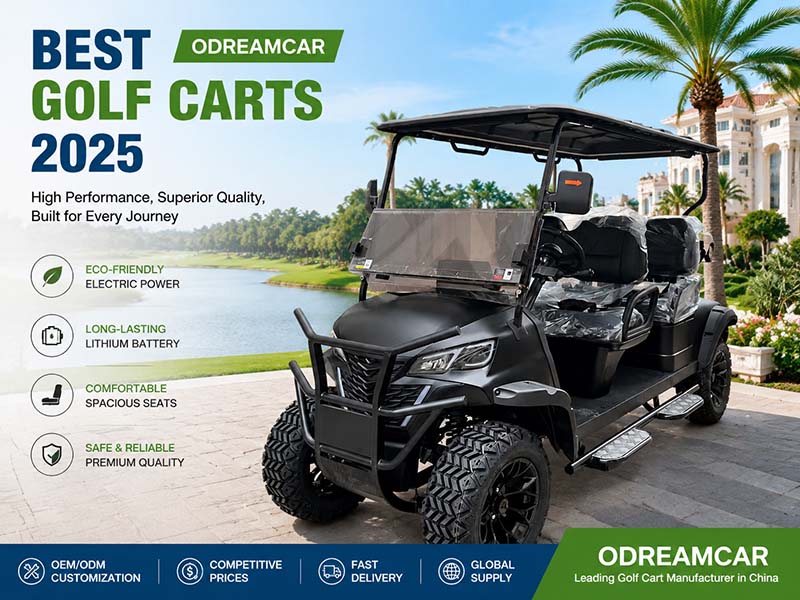
Denago vs. ODREAMCAR
Denago: Focuses on finished vehicle models for the North American market; features mature branding and standardized configurations.
ODREAMCAR: Leverages Chinese manufacturing capabilities (OEM/ODM); supports deep customization (appearance, seating, batteries, functional modules, etc.); ideal for bulk purchasing and project-based clients.
Denago: Emphasizes vehicle design and the end-user retail experience.
ODREAMCAR: Emphasizes supply chain flexibility and cost control; ideal for distributors and B2B export markets.
Denago: Fixed standard configurations with limited upgrade potential.
ODREAMCAR: Adaptable to specific use cases (versions available for scenic area transport, hotel shuttles, golf courses, community commuting, etc.).
Who is Denago for?
Suitable for:
- Daily community commuting
- Resort/hotel shuttle services
- Users seeking high-end features on a limited budget
- Short-distance family use
Not suitable for:
- High-intensity commercial operations
- Users who prioritize resale value
- Users in remote areas lacking maintenance support
Buying Recommendations
When purchasing a Denago golf cart, it is recommended to focus on the following:
Whether it is a street-legal version
Battery and charging system specifications
After-sales support capabilities of the local dealer
Warranty terms and coverage
Long-term availability of parts and accessories
Selecting the right model is crucial; for example, a four-seater version is suitable for family use, while a six-seater model is better suited for commercial applications.
FAQ
1. Are Denago golf carts good?
Yes, they are good for modern users who want high features at a competitive price, but long-term reliability is still developing.
2. How fast is a Denago golf cart?
Most models can reach around 20–25 mph depending on configuration.
3. How long does the battery last?
Typically 30–45 miles per charge under normal conditions.
4. Is Denago better than Club Car?
Denago offers better features for the price, but Club Car is more reliable long-term.
5. Are Denago carts street legal?
Some models are street legal depending on local regulations and configuration.
Denago golf carts are a classic example of an “emerging brand with high-end specifications.” Their strengths lie in their tech-forward features, extensive equipment, and attractive pricing, though their after-sales support networks and long-term reliability are still maturing.
If you prioritize:
High-end features
Modern design
A more budget-friendly price
…then Denago is a great choice.
However, if you place greater importance on:
Long-term reliability
Resale value
A global after-sales network
…then established brands remain the safer bet.