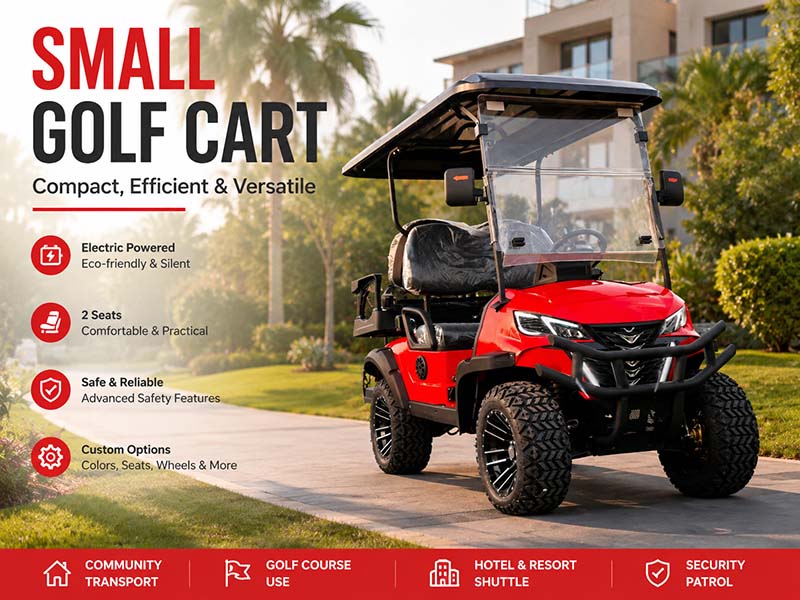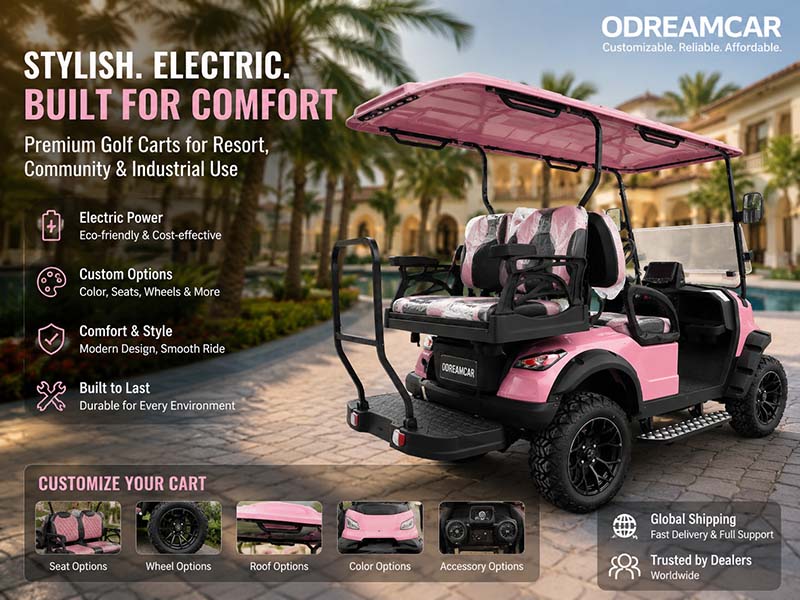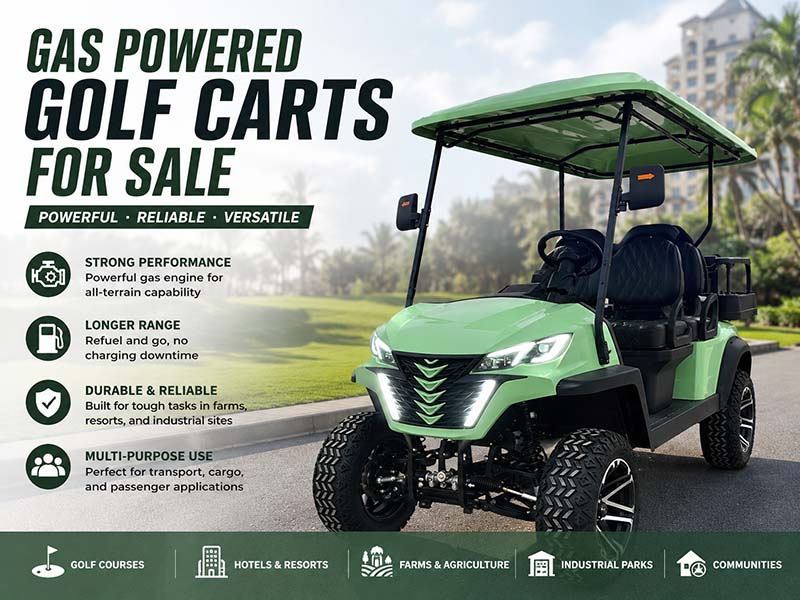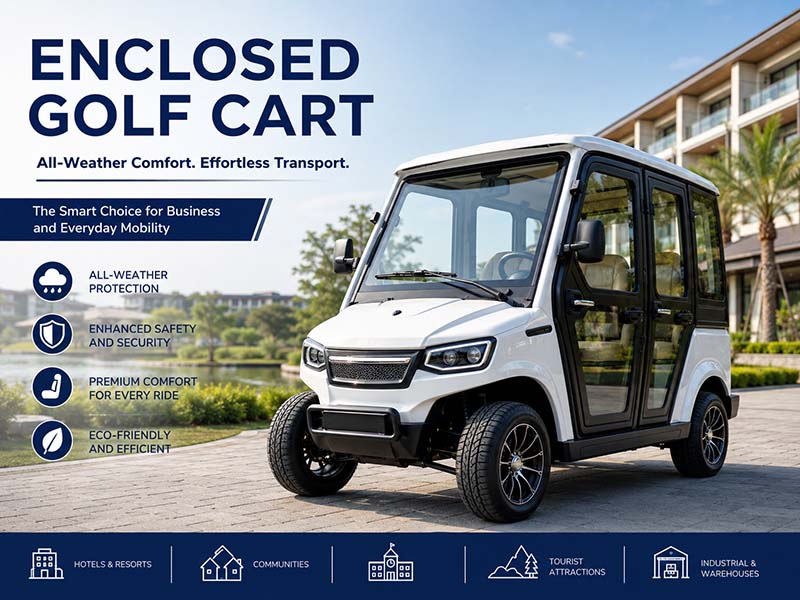

Driven by the evolution of global short-distance mobility and rising demand for low-speed vehicles (LSVs), lithium-powered golf carts are rapidly replacing traditional lead-acid models, becoming the preferred choice for golf courses, resorts, residential communities, and commercial settings. Amidst this trend, Chinese manufacturers have emerged as key global suppliers, leveraging supply chain advantages and offering excellent cost-performance ratios.
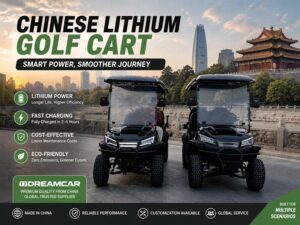
Global Trends: The Rapid Adoption of Lithium-Powered Golf Carts
Over the past decade, the role of golf carts has shifted significantly, evolving from specialized course equipment into versatile vehicles for short-distance transport. Key drivers of this transformation include:
Growing demand for low-carbon transportation in urban areas and tourist attractions
Advancements in battery technology (the shift from lead-acid to lithium)
A greater focus on controlling operating costs
Rising demand for shuttle vehicles in hotels, residential communities, and on campuses
Compared to traditional lead-acid models, lithium-based systems offer distinct advantages in terms of driving range, service life, and maintenance costs, making them a pivotal factor in the industry’s upgrade.
What is a lithium-powered golf cart?
A lithium-powered golf cart is an electric golf cart that utilizes a lithium-ion battery as its core power system. Its basic components include:
Lithium battery pack (core power system)
Motor drive system
Smart controller
Charging system
Compared to traditional lead-acid battery vehicles, lithium-based systems offer higher energy density and more stable power output, resulting in superior efficiency and a lighter overall vehicle weight.

Key advantages of Chinese lithium-powered golf carts
1. Longer service life
Lithium batteries typically offer a cycle life 3–5 times that of lead-acid batteries, significantly reducing replacement frequency and long-term costs.
2. Faster charging
Lithium-powered models can generally be fully charged within 3–6 hours, making them ideal for high-frequency operational environments such as hotels or tourist attractions.
3. Lighter weight and higher performance
The lighter weight of lithium batteries reduces overall energy consumption while enhancing hill-climbing ability and acceleration.
4. Lower maintenance costs
They require no water refilling and suffer from no memory effect; routine maintenance involves little more than basic inspections.
Why do global buyers choose Chinese-made golf carts?
The competitiveness of China’s golf cart manufacturing sector is primarily reflected in the following areas:
1. Significant Cost Advantages
For equivalent specifications, Chinese-made carts typically offer superior value for money, allowing for better control over procurement budgets.
2. Strong OEM/ODM Capabilities
Chinese factories support highly customized production, including:
2, 4, 6, and 8-seater models
Lifted carts
Utility carts (with cargo beds)
Street-legal (LSV) configurations
3. Comprehensive Supply Chain Support
Core components—such as batteries, motors, and controllers—can be integrated locally, enhancing delivery efficiency.
4. Extensive Global Export Experience
Products are widely exported to markets in Europe, the Americas, the Middle East, and Southeast Asia, with deep familiarity regarding regional certification and regulatory requirements.
ODREAMCAR: A Leading Chinese Brand of Lithium-Powered Golf Carts
Among the many manufacturers in China, ODREAMCAR stands out as a representative brand specializing in lithium-powered drive systems and multi-scenario application solutions.
Key product features include:
A range of models seating 2, 4, or 6 passengers
Customizable aesthetics and functional configurations
OEM/ODM partnership options
Availability for global distributors and project clients
Typical application scenarios:
Golf course operations
Hotel and resort shuttle services
Short-distance community commuting
Campus and scenic area transport systems
Leveraging flexible customization capabilities and cost advantages, the brand is experiencing rapid growth in overseas B2B markets.
Analysis of Key Application Scenarios
1. Golf Courses
Lithium-powered models operate quietly, ensuring no disruption to the game while remaining turf-friendly.
2. Hotels and Resorts
Used for guest shuttles and internal transport, enhancing the overall service experience.
For high-end projects, the selection of the “best golf cart for resort transportation” has become a key factor in procurement decisions, with a particular focus on comfort and aesthetic design.
3. Communities and Low-Speed Mobility Systems
Serving as a short-distance commuting tool, these carts can replace certain internal combustion vehicles and are suitable for gated or semi-enclosed communities.
4. Campuses and Public Areas
With rising demand for internal campus transportation, safety, low-speed operation, and eco-friendliness have become core requirements. Solutions recognized as the “best golf cart for school campus transportation” are increasingly being adopted by educational institutions.
Comparison of Lithium Battery vs Lead-Acid Golf Carts
| Item | Lithium Battery System | Lead-Acid System |
| Service life | Longer | Shorter |
| Charging time | 3–6 hours | 6–10 hours |
| Maintenance cost | Very low | Higher |
| Energy density | High | Moderate |
| Weight | Lighter | Heavier |
From a long-term operational perspective, lithium battery systems offer a clear advantage in overall cost efficiency.
How to Choose Golf Cart?
When purchasing, you should consider several factors, including:
Usage scenario (golf course, residential community, hotel, or industrial site)
Seating capacity (2 to 8 seats)
Battery type and range requirements
Street-legal status (LSV certification)
Customization needs (appearance or features)
Selection strategies vary by use case. For instance, stability and maintenance costs are priorities in gated communities and commercial operations, whereas comfort and aesthetics are more important for tourism and shuttle services.
Can it be driven on public roads? A brief overview of LSV regulations
In some regions, lithium-powered golf carts can be driven legally on public roads as Low-Speed Vehicles (LSVs), provided they meet specific requirements, such as:
Maximum speed limits (20–25 mph)
Lighting systems
Seatbelts
VIN (Vehicle Identification Number)
Rearview mirrors and turn signals
Regulations vary by state, so it is essential to check local laws before purchasing.
Lithium battery lifespan and maintenance
Lithium battery systems require relatively simple maintenance, but you should still:
Avoid prolonged deep discharge
Use the original manufacturer’s charger
Maintain a 50% charge level during long-term storage
Avoid exposure to extreme heat
Under normal usage conditions, the lifespan of a lithium battery is typically 5–8 years or even longer.
Future Industry Trends
Lithium-powered golf carts are expected to evolve in the following directions:
Intelligence (screens, navigation, fleet management)
Lightweight and modular design
Solar-assisted charging
Advanced driver-assistance systems (ADAS)
As global green transportation policies advance, Chinese-made products will continue to expand their influence in the global market.
Chinese lithium-powered golf carts are becoming a key component of the global low-speed electric vehicle market, with core strengths in cost control, manufacturing capabilities, and customization flexibility.
Driven by maturing lithium-ion technology and expanding global use cases, these products are evolving from simple “golf utility vehicles” into “multi-scenario short-distance transportation solutions.”
FAQ
Q1: What are the advantages of lithium-powered golf carts over lead-acid models?
Lithium batteries offer longer lifespans, faster charging, and lighter weight, while requiring virtually no routine maintenance.
Q2: Are Chinese lithium-powered golf carts expensive?
Compared to European and American brands, Chinese-made carts typically offer a price advantage for equivalent specifications and support customization.
Q3: Can lithium-powered golf carts be used for commercial operations?
Yes, they are widely used in commercial settings such as hotels, resorts, community shuttle services, and tourist attractions.
Q4: What is the typical battery lifespan?
Under normal use, the lithium battery lifespan is approximately 5–8 years, depending on usage frequency and maintenance.
Q5: How do I choose the right model?
Selection should be based on factors such as the intended use scenario, passenger capacity, range requirements, and whether LSV (Low-Speed Vehicle) certification is needed.