
As golf carts venture beyond the fairway—into residential communities, industrial facilities, tourist attractions, and even urban short-distance transit—” Street Legal Golf Cart” are rapidly emerging as a popular mode of transportation. This raises a key question: How much does a truly road-legal golf cart actually cost?
In this article, we provide a comprehensive breakdown of this topic, examining it from various angles—including price ranges, influencing factors, configuration requirements, and brand selection.
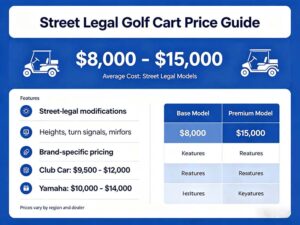
What is a Street-Legal Golf Cart?
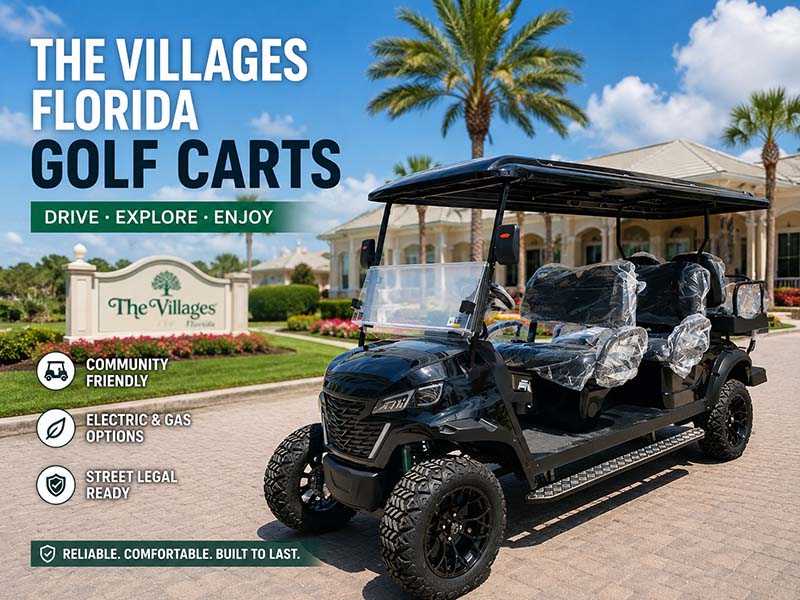
A “street-legal golf cart”—also known as a Low-Speed Vehicle (LSV)—refers to a golf cart that complies with U.S. federal standards (FMVSS 500) and is legally permitted to operate on public roads.
General requirements include:
Maximum speed: 20–25 mph
Equipped with a Vehicle Identification Number (VIN)
Lighting system (headlights, taillights, turn signals)
Rearview mirrors
Seat belts
Windshield
Once these conditions are met, the vehicle is typically permitted to operate on roads with a posted speed limit of 35 mph or less.

Street-Legal Golf Cart Price Ranges (2025–2026)
Based on the latest market data, the current prices for street-legal golf carts in the U.S. market are approximately as follows:
1. Categorized by Seating Capacity
Type | Price Range
2-Seater | $8,995 – $11,995
4-Seater | $9,995 – $14,995
6-Seater | $11,995 – $17,995
2. General Market Pricing (Broader Range)
Entry-Level: $5,000 – $8,000
Mid-Range/Mainstream: $8,000 – $14,000
High-End/Premium: $14,000 – $23,000
Street-Legal Models: $9,000 – $16,000+
In Summary:
For a truly compliant street-legal golf cart, the mainstream price falls within the range of $10,000 to $18,000.
Why Are Street-Legal Models More Expensive?
Many customers ask: Why are “street-legal” golf carts significantly more expensive?
The primary reasons lie in the following points:
1. Safety Regulation Costs
Compared to standard golf carts, LSVs (Low-Speed Vehicles) must comply with specific road safety standards—including lighting systems, seatbelts, and other features—the inclusion of which directly increases manufacturing costs.
2. Batteries and Powertrain Systems
Most mainstream models currently utilize lithium-ion batteries:
Lifespan: 8–12 years
Extended driving range
Maintenance-free operation
However, their cost is more than 30% higher than that of traditional lead-acid batteries.
3. Electronics and Smart Features
An increasing number of models come equipped with:
Rear-view cameras
Touchscreen displays
Bluetooth audio systems
Smart control systems
All of these features contribute to the rising price point.
Hidden Costs: The True Total Price You Need to Know
When purchasing a street-legal golf cart, the cost involves more than just the price of the vehicle itself; it also includes:
1. Licensing and Registration Fees
Policies vary by state, but these typically include:
DMV registration fees
License plate fees
Inspection fees
2. Insurance Costs
Since these are classified as “road-legal vehicles,” insurance coverage is typically required.
3. Modification Costs (for non-factory LSVs)
If you purchase a standard golf cart and subsequently modify it:
Modification costs: $1,500 – $3,000
In reality, purchasing a factory-built, street-legal model directly is both more cost-effective and safer.
Pricing Recommendations for Various Use Cases
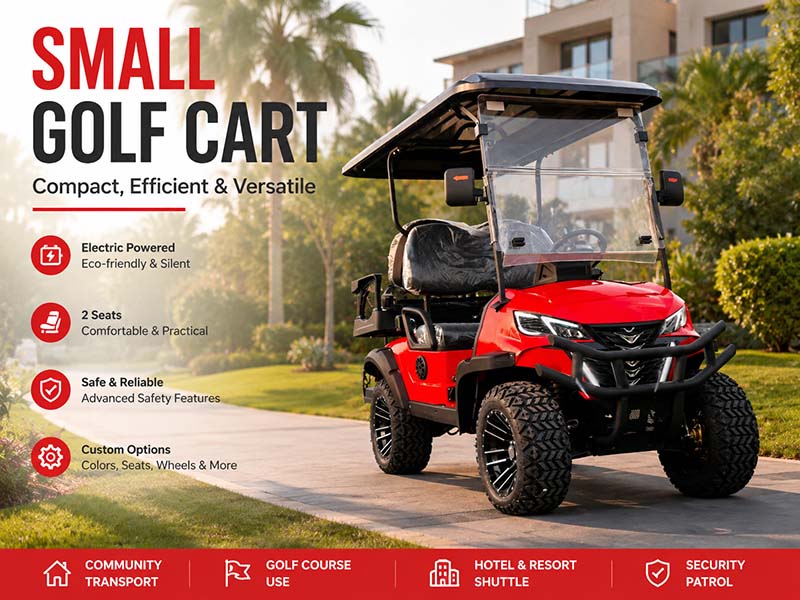
1. Community / Home Use
Recommended Budget: $9,000 – $13,000
Suitable Model: 4-Seat 72V Electric Mini Golf Cart (Offers the best value for money)
2. Scenic Spots / Hotels / Commercial Use
Recommended Budget: $12,000 – $18,000
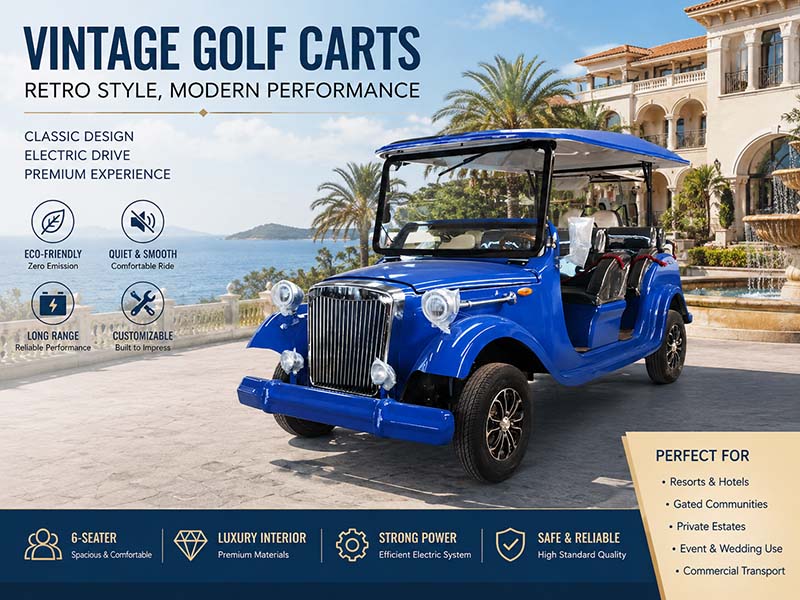
Recommended Models: 6-seater or custom-configured vehicles
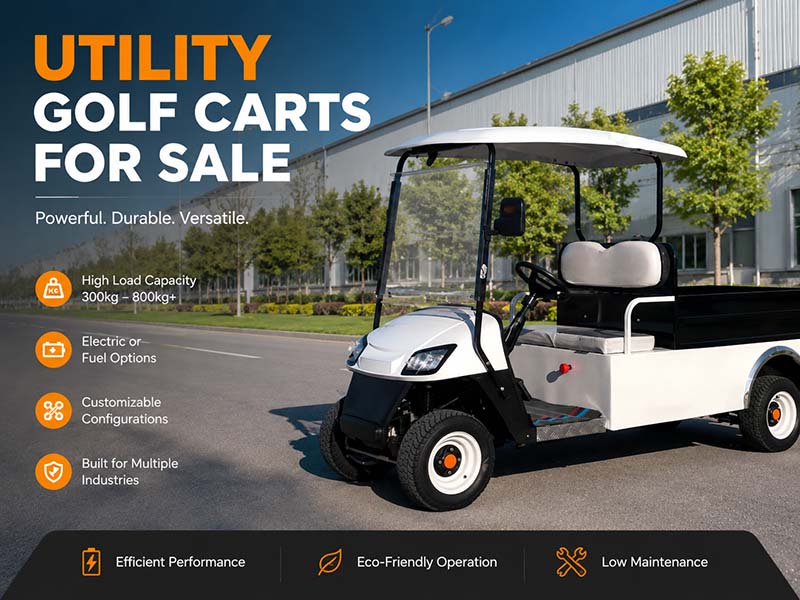
3. Industrial / Warehouse Transport
Recommended Budget: $10,000 – $16,000
Recommended Features: Cargo box and reinforced chassis (for enhanced practicality)
Why Choose ODREAMCAR?
Amidst the multitude of golf cart brands, ODREAMCAR stands out as a small-to-medium-sized factory-based manufacturer. By eliminating complex intermediary layers, we focus intently on providing our customers with flexible, cost-effective, and fully customizable solutions.
1. Factory-Direct Supply: Greater Price Transparency
We operate on a direct-sales model, cutting out middleman markups to ensure our customers can acquire high-specification products at more reasonable prices.
Get higher specifications and a wider range of options for the same budget.
2. The “Small Factory” Advantage: Robust Customization Capabilities
Unlike large-scale, standardized brands, we can rapidly tailor our solutions to meet specific customer requirements:
Seating Capacity (2-seater / 4-seater / 6-seater / 8-seater)
Inclusion of Cargo Beds/Boxes
Custom Exterior Colors and Logo Branding
Adjustments to Functional Configurations
Ideal for engineering projects, bulk purchasing, and specialized applications.
3. One-on-One Service: Streamlined Communication
As a compact team, we place a high value on every single customer:
Rapid response to inquiries and needs
Direct access to our technical and sales experts
Tailored recommendations for optimal configurations
No bureaucratic layers—just maximum efficiency.
4. Balancing Practicality with Durability
Our product designs are optimized for real-world usage scenarios, making them particularly suitable for:
Internal Factory Transport (Electric Utility Vehicles for Industrial Use)
Campus & Property Patrols (Golf Carts for Communities)
Scenic Area & Commercial Shuttles (Golf Carts for Resorts)
Internal Hotel Transportation (Golf Carts for Hotels)
Campus & Educational Institution Commuting (Golf Carts for Schools/Campuses)
We prioritize being “functional, durable, and easy to maintain” over unnecessary, excessive features.
5. Support for Small-Batch & Project-Based Orders
We welcome not only single-unit purchases but are also perfectly suited for:
Small-batch trials
Project-specific procurement
Long-term supply partnerships
Offering a flexible and customer-friendly approach.
Is a Street-Legal Golf Cart Worth Buying?
If you have the following needs, the answer is: Absolutely.
✔ Short-distance travel within a community
✔ Transportation within industrial parks
✔ Shuttle services in scenic areas
✔ An eco-friendly alternative to traditional vehicles
Compared to automobiles, golf carts offer:
Lower operating costs
Zero emissions
Easier maintenance
The street-legal version, in particular, further expands the range of potential applications.
So, let’s return to the core question:
How much is a street-legal golf cart?
✔ Standard Models: $9,000 – $16,000
✔ Mainstream Configurations: $10,000 – $18,000
✔ Premium Models: $18,000+
The final price depends on:
Seating capacity
Battery type
Configuration level
Whether it is factory-compliant
FAQ
1. Are ODREAMCAR golf carts street-legal?
Yes. Some of our models support “Street Legal” (LSV) configurations, meeting Low-Speed Vehicle standards—such as being equipped with lighting systems, seatbelts, rearview mirrors, etc. However, whether a specific vehicle is legally permitted on public roads ultimately depends on local regulations and the completion of the necessary registration process.
2. Which industries are your products primarily suited for?
ODREAMCAR products are widely utilized across a variety of settings, including:
Internal Factory Transport (Industrial Use)
Warehousing & Logistics Distribution
Campus & Community Patrols
Hotel & Resort Shuttles
Campus Commuting (Schools & Universities)
3. Do you offer custom golf cart options?
Yes. As a direct-from-factory supplier, we provide customization services tailored to our clients’ specific needs, such as:
Seating Capacity (2–8 seats)
Cargo Bed Configuration
Color Schemes & Logo Branding
Functional Upgrades & Accessories
4. Are your products suitable for bulk purchasing?
Absolutely. We welcome small-batch trial orders, as well as long-term partnerships and project-based procurement. Our solutions are particularly well-suited for engineering projects, campus/facility operations, and dealer collaborations.
5. What are ODREAMCAR’s advantages compared to major brand-name manufacturers?
As a direct-from-factory supplier, ODREAMCAR offers the following key advantages:
More Competitive Pricing
Greater Customization Flexibility
Faster Communication & Delivery Efficiency
Designs Better Optimized for Real-World Application Scenarios